
Understanding Our Universe: Space Research Agencies
Introduction
The universe is an endless source of fascination, and space science and research institutions have been at the forefront of exploring and uncovering its mysteries. These institutions have played a vital role in pushing the boundaries of scientific discovery, developing new technologies, and advancing our understanding of the cosmos.
The topic of space science and research institutions is vast and complex, with many different facets to explore. In this article, we will provide a brief synopsis of this expansive field, focusing on the evolution of space agencies and institutions, the major players in the field, and the emerging space powers and private space companies that are shaping the future of space exploration. We will also touch on the role of space-based solutions in addressing global issues, such as climate change and natural disasters, and the importance of international cooperation and collaboration in advancing space science and research.
While this article aims to provide a comprehensive overview of the topic, it is important to note that there is much more to be explored and understood. In the coming articles, we will delve deeper into specific subjects related to space science and research institutions, providing more detailed insights into the ongoing efforts to advance space exploration and scientific discovery.Join us as we explore the vast expanse of space and the exciting possibilities it holds.
Evolution of Space Agencies and Institutions
From the early days of the space race to the rise of emerging space powers, the landscape of space science and research institutions has evolved significantly.
Space science and research institutions have played a vital role in advancing space exploration and scientific discovery. The landscape of space science and research institutions has evolved significantly from the early days of the space race to the rise of emerging space powers.
Definition and Scope of Space Science and Research Institutions
Space science and research institutions are organizations dedicated to the study of space and the universe. They may be government-funded or privately owned and focus on a wide range of topics, from space exploration and planetary science to astronomy and astrophysics. These institutions are responsible for conducting research, developing new technologies, and advancing our understanding of the universe.
Timeline of Space Science and Research Institutions
Here are just a few significant events for space agencies and related countries.
- 1957 - USSR launches first artificial satellite Sputnik 1.
- 1961 - USSR’s Yuri Gagarin becomes the first human in space.
- 1958 - NASA founded. The new agency launched its first satellite, Pioneer 1.
- 1959 - Italy’s first satellite San Marco 1 launched.
- 1962 - France’s first satellite Astérix-1 launched.
- 1962 - NASA’s John Glenn becomes the first American to orbit Earth.
- 1962 - Canada launches its first satellite Alouette 1.
- 1965 - Australia launches its first satellite WRESAT.
- 1968 - India launches its first satellite Aryabhata.
- 1969 - Japan Aerospace Exploration Agency ( JAXA) founded.
- 1970 - Japan launches its first satellite Ohsumi.
- 1970 - China launches its first satellite Dongfanghong I.
- 1976 - Indonesia launches its first satellite Palapa A1
- 1979 - India’s first satellite application Rohini 1 launched.
- 1986 - China launches its first astronaut Yang Liwei into space.
- 1986 - Sweden launches its first satellite Viking.
- 1988 - Israel launches its first satellite Ofek-1.
- 1989 - Canadian Space Agency ( CSA) founded.
- 1990 - Argentina launches its first satellite Lusat.
- 1992 - South Korea launches its first satellite Kitsat-1.
- 1993 - China launches its first astronaut Yang Liwei into space.
- 1997 - European Space Agency ( ESA) coordinates first multinational space mission, Cassini-Huygens to Saturn.
- 2018 - Saudi Space Commission established.

Major Space Science and Research Institutions
There are many space science and research agencies around the world, each with their own unique focus and areas of expertise. This section will provide an overview of some of the most prominent institutions and their contributions to space exploration and scientific discovery.
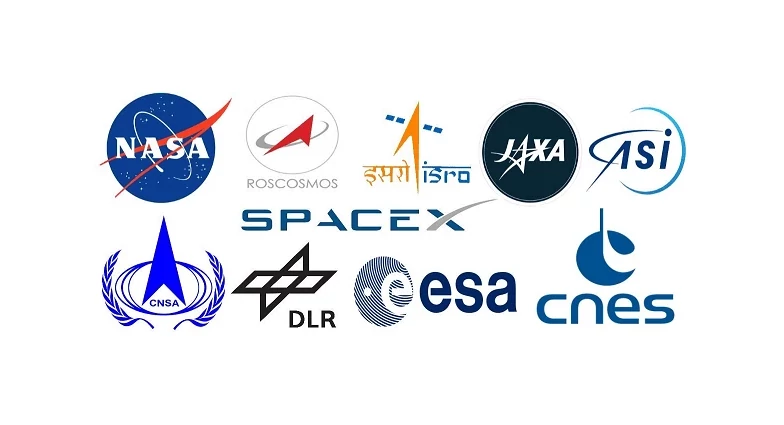
- NASA: The National Aeronautics and Space Administration is one of the most well-known space science and research institutions in the world. NASA is responsible for a wide range of space exploration missions, from the Apollo moon landings to the Mars rovers. NASA also conducts research in areas such as astrophysics, planetary science, and astrobiology.
- RFSA: The Russian Federal Space Agency is Russia’s national space agency and is responsible for launching a wide range of space exploration missions, including the Soyuz missions to the International Space Station. RFSA also conducts research in areas such as astrophysics, planetary science, and space medicine.
- CNSA: The China National Space Administration is China’s national space agency and is responsible for a wide range of space exploration missions, including the Chang’e lunar missions and the Tiangong space station. CNSA also conducts research in areas such as astrophysics, planetary science, and Earth observation.
- ESA: The European Space Agency is a collaborative effort between European countries to advance space exploration and scientific research. ESA is responsible for a wide range of missions, including the Rosetta mission to study a comet and the Gaia mission to map the Milky Way galaxy. ESA also conducts research in areas such as astrophysics, planetary science, and Earth observation. Relevant are also the programs of European national agencies, in primis the National Centre for Space Studies (CNES), German Aerospace Center (DLR) and Italian Space Agency (ASI).
- JAXA: The Japan Aerospace Exploration Agency is Japan’s national space agency and is responsible for a wide range of space exploration missions, including the Hayabusa asteroid sample return mission and the Akatsuki mission to Venus. JAXA also conducts research in areas such as astrophysics, planetary science, and space medicine.
- ISRO: ISRO is the national space agency of India. It is responsible for designing and launching satellites, rockets, and spacecraft for various scientific and commercial purposes. ISRO has achieved many milestones in space exploration, such as sending missions to the Moon and Mars, developing indigenous launch vehicles and satellites, and collaborating with other international space agencies. ISRO’s vision is to harness space technology for national development and benefit humanity.
Emerging Space Powers and Private Space Companies
The space industry is rapidly evolving, with new players entering the field and established institutions facing new challenges. This section will explore the emerging space powers agencies and private space companies that are shaping the future of space exploration and scientific discovery.
Emerging Space Powers Agencies
In recent years, several space agencies have emerged as major players in the space industry, including the Canadian Space Agency (CSA), the South Korean space agency, and the Saudi Space Commission. These agencies are investing heavily in space exploration and scientific research, and are developing their own capabilities for launching missions and conducting research. Here are some notable developments:
- CSA: In 2013, the CSA launched its own space agency, which has since focused on developing new technologies and collaborating with international partners on space exploration missions. The CSA has also been involved in developing advanced robotics for space exploration.
- South Korea space agency: In 2013, South Korea launched its first satellite, and has since focused on developing its space industry through partnerships with other countries and organizations. The agency has also launched its own lunar orbiter and is planning its first moon landing in 2030.
- Saudi Space Commission: In 2018, the Saudi Space Commission established its own space agency, which is responsible for developing the country’s space industry and conducting space-related research. The agency has also launched its first satellite, and is planning to send a rover to the moon by 2024.
Private Space Companies
Private space companies such as SpaceX, Blue Origin, and Virgin Galactic are also playing an increasingly important role in the space industry. These companies are developing innovative new technologies and business models, and are driving down the cost of space exploration and scientific research. Here are some notable developments:

- SpaceX: Founded by Elon Musk in 2002, SpaceX has become a major player in the space industry, with a focus on developing reusable rockets and spacecraft. The company has conducted numerous missions for NASA and other organizations, and has plans for manned missions to Mars.
- Blue Origin: Founded by Jeff Bezos in 2000, Blue Origin is focused on developing reusable rockets and spacecraft for space tourism and scientific research. The company has conducted numerous successful suborbital flights, and is planning to send tourists to space in the near future.
- Virgin Galactic: Founded by Richard Branson in 2004, Virgin Galactic is also focused on space tourism, with plans to send tourists to the edge of space aboard its SpaceShipTwo spacecraft. The company has conducted successful test flights, and is planning to begin commercial operations soon.
Space-Based Solutions to Global Issues
Space science and research institutions play a crucial role in addressing global challenges, such as climate change, natural disasters, and food security.
Applications of Space Technology to Global Issues
Space technology, such as satellites and remote sensing, is being used by institutions worldwide to address pressing global challenges. Here are some examples:
- Climate change: Satellites are being used to monitor changes in the Earth’s climate, such as rising sea levels and melting ice caps. Remote sensing is also being used to track deforestation and other land-use changes that contribute to climate change.
- Natural disasters: Satellites are being used to provide early warning of natural disasters such as hurricanes, tsunamis, and earthquakes. They can also be used to map the extent of damage after a disaster has occurred.
- Food security: Satellites are being used to monitor crop health and predict yields, which can help farmers make more informed decisions about planting and harvesting. Remote sensing is also being used to monitor water availability and soil moisture, which is critical for agriculture.
Examples of Space-Based Solutions
There are many specific projects and initiatives that showcase the potential of space-based solutions to address global challenges. Here are some examples:
- The European Space Agency’s Climate Change Initiative is using satellite data to monitor changes in the Earth’s climate, with a focus on improving our understanding of the carbon cycle and the impact of climate change on the oceans.
- NASA’s Earth Observing System is a series of satellites that are being used to monitor the Earth’s atmosphere, oceans, and land surfaces. This data is being used by scientists around the world to study climate change, natural disasters, and other global issues.
- The United Nations Food and Agriculture Organization is using satellite data to monitor water availability and crop health in developing countries, with the aim of improving food security and reducing poverty.
Collaboration Among Space Agencies and Institutions
International cooperation and joint projects among space agencies and research institutions can lead to more effective and comprehensive solutions to global challenges. Here are some examples:
- The International Charter on Space and Major Disasters is a joint initiative between several space agencies that provides satellite imagery and other data to support emergency response efforts after natural disasters.
- The Group on Earth Observations is a partnership of governments and international organizations that is working to improve the availability of Earth observation data for scientific research and decision-making.
Future of Space Science and Research Institutions
Space agencies and space research institutions are pursuing an exciting future of possibilities. This looks at trends shaping space exploration and discovery.
Space-Based Solutions
Space science and research institutions are developing new technologies and solutions that have applications beyond the space industry. Here are some examples:
- Earth observation: Satellites are being used to monitor the Earth’s climate, natural resources, and other important environmental factors. This data can be used to predict natural disasters, monitor changes in the Earth’s ecosystem, and improve global communication and navigation systems.
- Space-based manufacturing: In-space manufacturing has the potential to revolutionize space exploration by reducing the cost and complexity of building and launching spacecraft and other equipment.
- Space-based energy production: Solar power generation in space has the potential to provide a nearly unlimited source of clean energy that could be beamed back to Earth.
Increased Focus on Planetary Science
There is a growing interest in exploring and studying other planets and celestial bodies in our solar system and beyond. Here are some notable developments:
- Mars exploration: NASA and other space agencies are planning a series of manned and unmanned missions to Mars in the coming years, with the ultimate goal of establishing a permanent human presence on the planet.
- Europa exploration: NASA is planning a mission to explore Europa, one of Jupiter’s moons, which is believed to have a subsurface ocean that could potentially support life.
- Asteroid mining: Private space companies are developing technologies to mine asteroids for valuable resources, such as rare metals and water.
Emphasis on International Cooperation
The space industry is becoming increasingly global, with more countries and companies entering the field. Here are some notable developments:
- International Space Station: The International Space Station is a joint project between several countries, including the United States, Russia, and Japan. The space station is used for scientific research and as a platform for testing new technologies.
- Lunar Gateway: NASA is planning to build a lunar gateway, a small space station in orbit around the Moon, that will serve as a staging point for future manned missions to the Moon and beyond.
- Artemis Accords: The Artemis Accords are a set of guidelines for international cooperation and collaboration in space exploration and scientific research.
Continued Investment in Human Spaceflight
Despite the rise of robotic missions, human spaceflight continues to be a major focus for space science and research institutions. Here are some notable developments:
- Commercial Crew Program: NASA’s Commercial Crew Program is a partnership with private space companies to develop spacecraft that can transport astronauts to and from the International Space Station.
- Moon missions: NASA is planning a series of manned missions to the Moon in the coming years, with the ultimate goal of establishing a sustained human presence on the Moon.
- Mars missions: NASA and other space agencies are planning manned missions to Mars in the coming decades, with the ultimate goal of establishing a permanent human presence on the planet.
Conclusion
πάντες ἄνθρωποι τοῦ εἰδέναι ὀρέγονται φύσει
All men naturally desire knowledge. (Aristotle Met. 1.980a)
Space science and research institutions have played a critical role in advancing our understanding of the universe and developing new technologies that have transformed our lives. From the earliest days of space exploration to the present, these institutions have pushed the boundaries of scientific discovery and paved the way for a more connected and sustainable future.
Throughout this article, we have explored the evolution of space agencies and institutions, the major players in the field, and the emerging space powers and private space companies that are shaping the future of space exploration. We have also examined the role of space-based solutions in addressing global issues, such as climate change and natural disasters, and the importance of international cooperation and collaboration in advancing space science and research.
We encourage you to share this post with your colleagues and friends, and to check out related content on our website. As we look towards the future of space science and research institutions, we are excited about the possibilities that lie ahead and the role that these institutions will continue to play in advancing scientific discovery and exploring the vast expanse of space.